⚖️🏛️ Clintons, Comer Clash Over Testimony Format in Epstein Probe
- HoaiLinh
- February 16, 2026
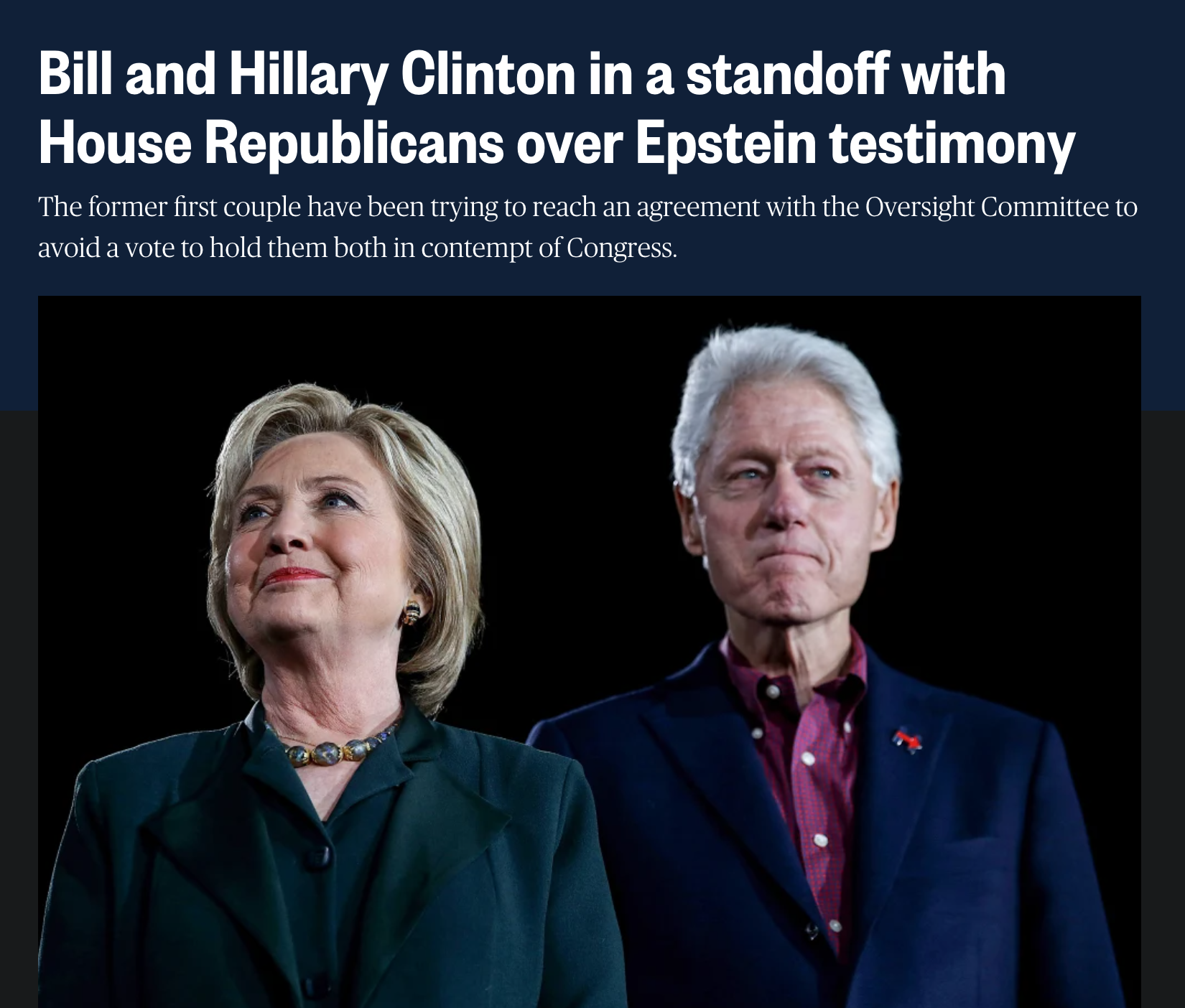
⚖️🏛️ Clintons, Comer Clash Over Testimony Format in Epstein Probe
A new dispute has emerged over how former President Bill Clinton and former Secretary of State Hillary Clinton will testify before the United States House Committee on Oversight and Accountability as part of its investigation into Jeffrey Epstein and Ghislaine Maxwell.
At issue is whether their testimony will occur in public hearings or behind closed doors.
 📩 Clintons Offer Public Testimony
In a letter to Oversight Chairman James Comer, the Clintons’ legal team proposed appearing publicly on consecutive days this month:
-
Hillary Clinton on February 26
-
Bill Clinton on February 27
While agreeing to be available for depositions, their attorneys emphasized a preference for open hearings, arguing that transparency would ensure fairness.
“Though you have notably never asked the Clintons to appear in an open hearing, we now believe that will best suit our concerns about fairness,” the letter stated.
“Their answers, and your questions, can be seen by all.”
The proposal frames public testimony as a way to avoid accusations of selective leaks or political maneuvering.
🔄 Comer Announces Closed-Door Depositions
After receiving the letter, Comer announced that the Clintons had agreed to transcribed, recorded depositions, which are typically conducted behind closed doors.
Comer said the committee looks forward to questioning them as part of its broader probe, emphasizing the goal of delivering “transparency and accountability” through its investigative process.
⚖️ Public Scrutiny vs. Private Proceedings
The disagreement underscores a larger political debate: whether high-profile testimony in sensitive investigations should unfold publicly or through private depositions.
Supporters of open hearings argue they ensure fairness and prevent selective disclosure. Advocates of closed-door sessions contend they allow for more thorough questioning without grandstanding.
As the Epstein investigation continues, the clash over format highlights how procedural decisions can carry major political consequences — shaping not only the substance of testimony, but also how it is perceived by the public.