Safeguarding Sovereignty: A New Bill in the UK Parliament
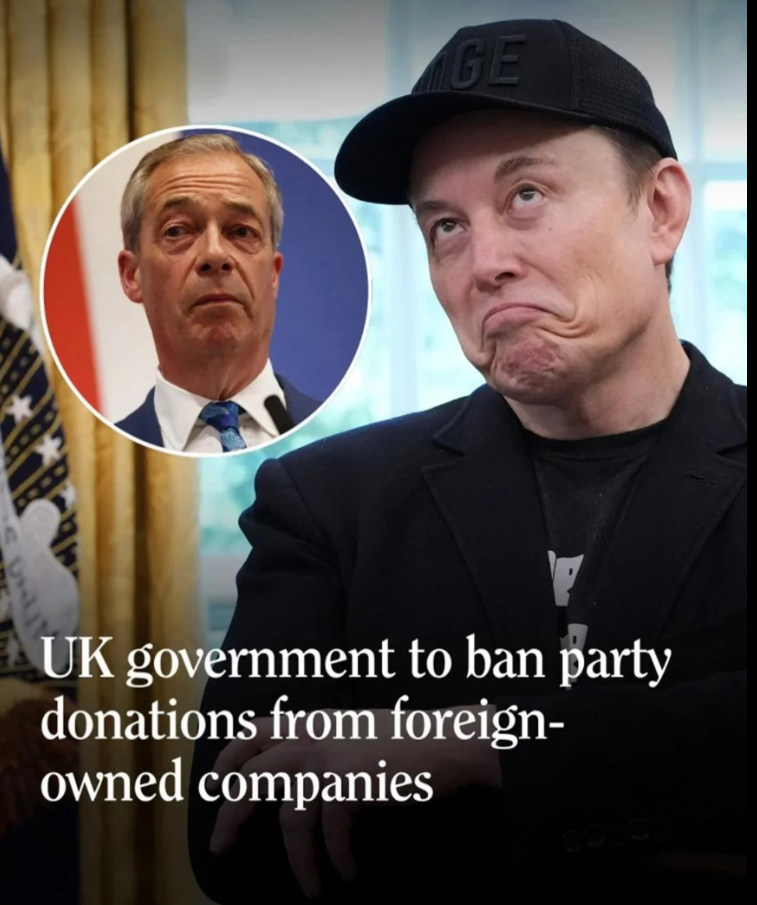
A new bill introduced today in the UK Parliament seeks to protect what many describe as the heart of British democracy. The proposed legislation would prevent companies without British ownership from donating to UK political parties. Supporters argue that the measure is designed to close potential loopholes in campaign finance law, reduce the risk of foreign interference, and reinforce public trust in the electoral system.
The proposal emerges amid renewed scrutiny over political donations and corporate structures. Recent reports suggested that Elon Musk could, in theory, donate up to £100 million to Reform UK through UK-based subsidiaries of his companies. While no such donation has been confirmed, the mere possibility has intensified debate. Critics worry that even legally compliant contributions from foreign-controlled entities could blur the lines between domestic political expression and external influence.
Under current UK electoral law, companies registered and operating in Britain may donate to political parties, provided they meet regulatory requirements. However, questions arise when ownership structures extend beyond national borders. Proponents of the new bill contend that registration alone should not determine eligibility; rather, ultimate ownership and control should matter. By restricting donations to companies genuinely owned and controlled by British citizens, lawmakers hope to ensure that political funding reflects domestic interests.
Opponents, however, caution that the issue is complex. In a globalized economy, many businesses operating in the UK have international shareholders, cross-border investments, and multinational leadership. Drawing a clear legal definition of “British ownership” may prove challenging. There are also concerns about unintended economic consequences or discouraging foreign investment. Balancing openness with security is a delicate task in modern governance.
At its core, the debate extends beyond any single individual or party. It touches on broader themes of transparency, accountability, and sovereignty. In democratic societies, public confidence depends on the belief that elections are shaped by the will of the people rather than the weight of external money. Even the perception of undue influence can erode trust. For many lawmakers, strengthening campaign finance rules is not simply a procedural adjustment—it is a statement about protecting democratic integrity.
As the bill moves through parliamentary debate, it will likely face rigorous examination and possible amendments. Regardless of its final form, the discussion itself reflects a nation grappling with how to safeguard its political system in an interconnected world. Ultimately, the question is not only about who may donate, but about whose voice truly carries influence in shaping the country’s future.