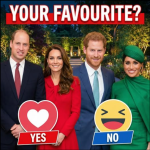
Titles, Tradition, and the Weight of Choice
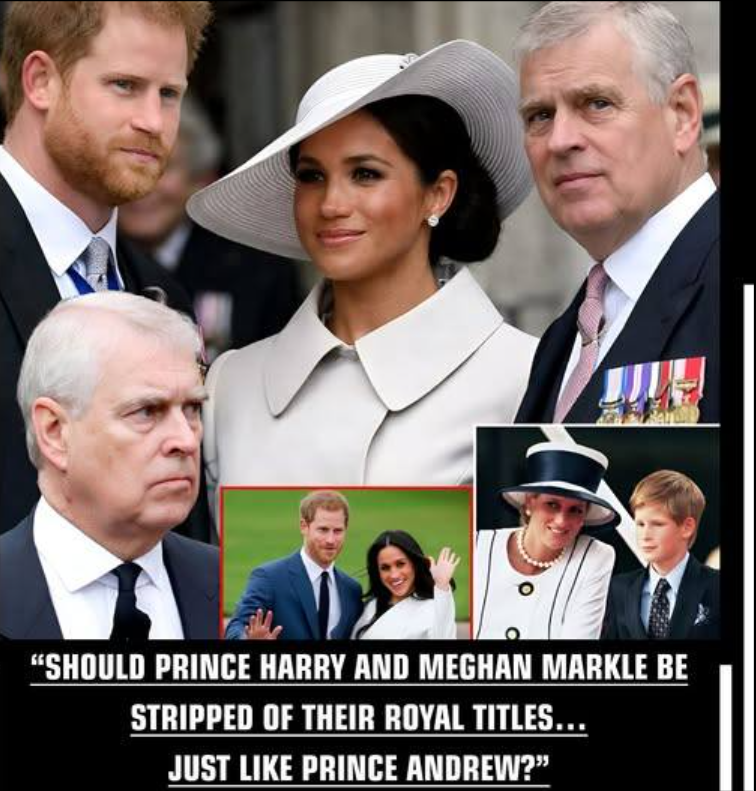
In the United States, the British monarchy can appear like a distant pageant—ornate, historic, almost theatrical in its ritual and symbolism. Crowns, carriages, and centuries-old ceremonies feel far removed from everyday American life. Yet from time to time, a question breaks through the spectacle and becomes unexpectedly personal: should Prince Harry, Duke of Sussex and Meghan, Duchess of Sussex lose their royal titles, as Prince Andrew, Duke of York did? The debate resonates not only as a constitutional issue, but as a human story unfolding before a global audience.
On the surface, the circumstances differ greatly. Prince Andrew stepped back from public duties following controversy and serious allegations, leading to the removal of his honorary military affiliations and royal patronages. Harry and Meghan, by contrast, chose to step away from senior royal roles in pursuit of financial independence and personal autonomy. There have been no criminal charges against them. Their departure was framed as a desire to build a new path—one shaped by openness, media projects, and advocacy. Yet comparisons persist because both situations raise questions about accountability and consequence within the royal framework.
The emotional weight of the debate extends beyond protocol. It touches on themes of power and pain, legacy and identity. Royal titles are not merely decorative; they are woven into the fabric of national history. To hold one is to symbolize continuity and collective memory. When family disagreements unfold publicly—through interviews, documentaries, and memoirs—the tension between private experience and public responsibility becomes impossible to ignore. What might have once remained within palace walls now plays out on a worldwide stage.
For some observers, retaining the titles while living independently outside the United Kingdom creates ambiguity. They argue that titles imply active service and allegiance to the Crown, currently led by Charles III. Others counter that titles are birthrights or marital designations, not conditional contracts that dissolve with disagreement. From this perspective, stripping them would escalate division rather than heal it. The discussion becomes less about legality and more about symbolism.
At its heart, the question reflects a broader cultural shift. Modern society increasingly values personal voice, transparency, and individual freedom. The monarchy, however, is rooted in tradition, restraint, and collective representation. When those values collide, friction is inevitable. Harry and Meghan’s journey highlights the tension between honoring inherited roles and defining one’s own narrative. Whether viewed as courageous independence or disruptive departure, their choices challenge long-standing expectations.
Ultimately, the debate over titles asks something deeper than who keeps a formal style of address. It asks what a title truly means in the twenty-first century. Is it a permanent emblem of lineage, or a living symbol tied to duty and service? As public opinion continues to evolve on both sides of the Atlantic, one truth remains clear: behind every royal title stands a human story—complex, imperfect, and profoundly shaped by the delicate balance between tradition and change.