U.S. Military Buildup Toward Iran Raises Deterrence and Escalation Concerns
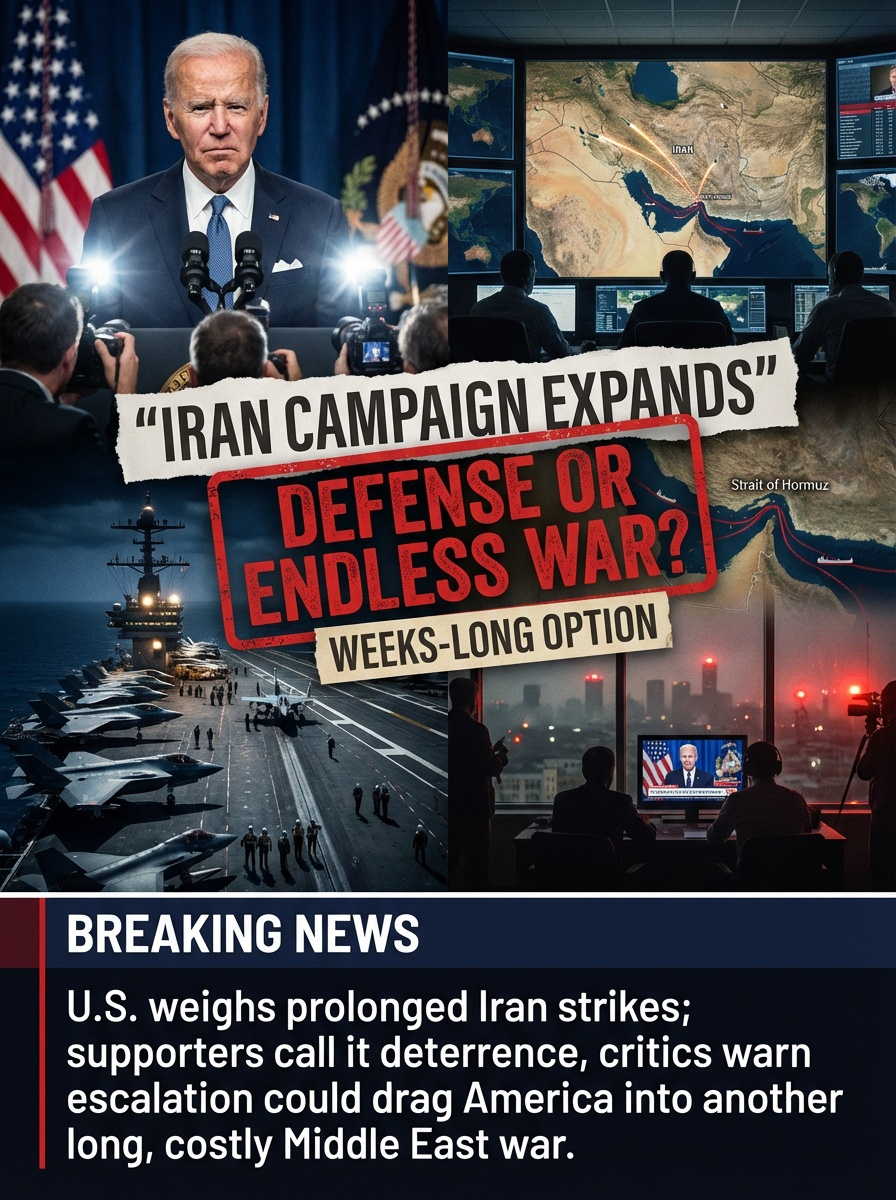
Washington / Middle East — The United States is weighing the possibility of a sustained military campaign against Iran, signaling a sharp escalation in tensions that is intensifying global debate over deterrence strategy, regional stability, and the risk of open-ended conflict.
Defense officials say planning scenarios now extend beyond limited retaliatory strikes to include operations that could last weeks, targeting Iranian missile systems, military infrastructure, and proxy networks if authorized by President Donald Trump. The expanded contingency planning reflects mounting concern within the administration over Iran’s regional military posture and nuclear activities.
As part of the buildup, the Pentagon has deployed a second aircraft carrier strike group to the Middle East, reinforcing airpower, missile defense coverage, and rapid-response capabilities across the Gulf region. U.S. officials describe the deployment as a deterrent measure designed to protect American forces, allied assets, and maritime energy routes — particularly shipping lanes linked to global oil supply.
President Trump has framed the posture as both defensive and strategic. In recent remarks, he suggested that leadership change in Tehran “would be the best thing,” comments that drew sharp criticism from foreign-policy analysts who warned such rhetoric could inflame tensions or be interpreted as regime-change signaling.
Iranian officials have responded with warnings that any U.S. attack would trigger “all-out war,” raising fears of retaliation through missile strikes, proxy militia operations, cyberattacks, or disruption of shipping in the Strait of Hormuz — a chokepoint through which a significant share of global oil exports transits.
Security experts say the dual-track approach — military pressure paired with ongoing diplomatic engagement — mirrors past U.S. coercive strategies. However, they caution that sustained strikes could produce unintended escalation, particularly if civilian infrastructure or regional allies become involved.
Energy markets have already shown volatility tied to conflict risk, while regional governments hosting U.S. forces are reassessing defensive readiness.
As diplomacy continues alongside force deployments, the unfolding crisis underscores a central strategic dilemma: whether intensified military pressure can compel concessions — or risks entrenching the United States in another prolonged Middle East confrontation.