Falling Used-Car Prices Help Ease U.S. Inflation, Fueling Policy Credit Debate
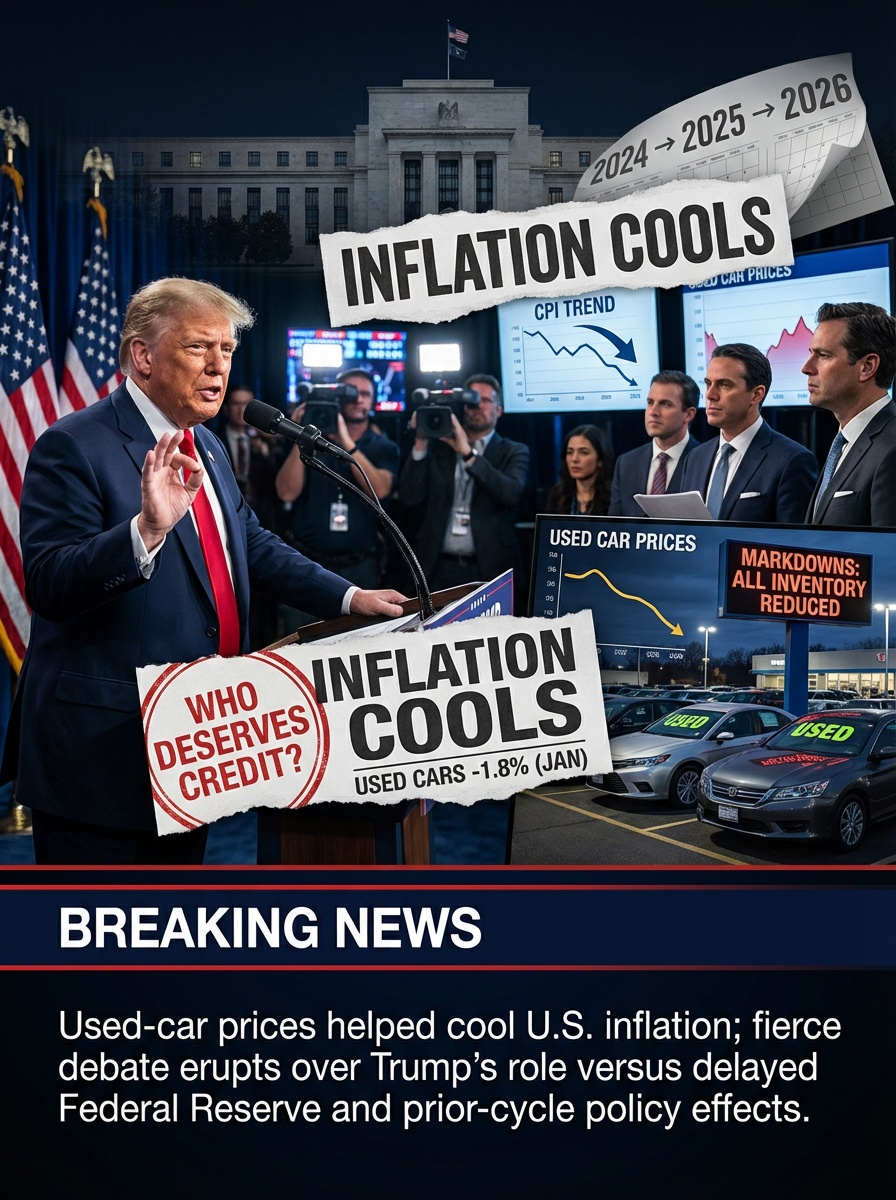
Washington — U.S. inflation continued its gradual cooling trend in January 2026, with declining used-vehicle prices emerging as a key factor behind the latest improvement in consumer price data — and sparking renewed political debate over the drivers of disinflation.
According to the Bureau of Labor Statistics, the Consumer Price Index rose 2.4% year over year in January, with a modest 0.2% monthly increase. Within the report, the used cars and trucks index fell 1.8% for the month, contributing significantly to the slowdown in headline inflation.
Used-vehicle pricing has been a volatile component of post-pandemic inflation. Prices surged between 2020 and 2022 amid semiconductor shortages, supply-chain bottlenecks, and constrained new-car production. As manufacturing output normalized and dealership inventories improved, resale prices began retreating — a trend economists say reflects structural supply recovery rather than short-term policy intervention.
The White House and Trump administration allies have highlighted the inflation slowdown as validation of current economic policies, citing deregulation, tariff protections, and domestic energy expansion as price-stabilizing forces. Supporters argue that stronger domestic production and tighter labor markets have helped contain cost pressures.
However, many economists attribute the disinflation trajectory primarily to Federal Reserve monetary tightening enacted in earlier years. The Fed raised interest rates aggressively between 2022 and 2024 to suppress demand and curb price growth — policy moves that typically influence inflation with long time lags.
Recent Federal Reserve data show policymakers held benchmark rates steady in late January 2026. Central-bank balance-sheet holdings stood at approximately $6.62 trillion as of the week of February 11, offering no clear evidence of sudden monetary easing.
Beyond used vehicles, slower shelter inflation and stabilizing energy prices have also contributed to the broader cooling trend, though costs in categories such as insurance and food remain elevated.
Market analysts say the inflation improvement is genuine but multifactorial. Disentangling the effects of fiscal policy, trade actions, supply normalization, and monetary tightening remains complex — particularly over short political timeframes.
As inflation approaches the Federal Reserve’s 2% target, policymakers now face a delicate balancing act: sustaining price stability without undermining economic growth or employment momentum.