Tumbler Ridge Mass Shooting Leaves Eight Dead, Rekindles Canada’s Gun Policy Debate
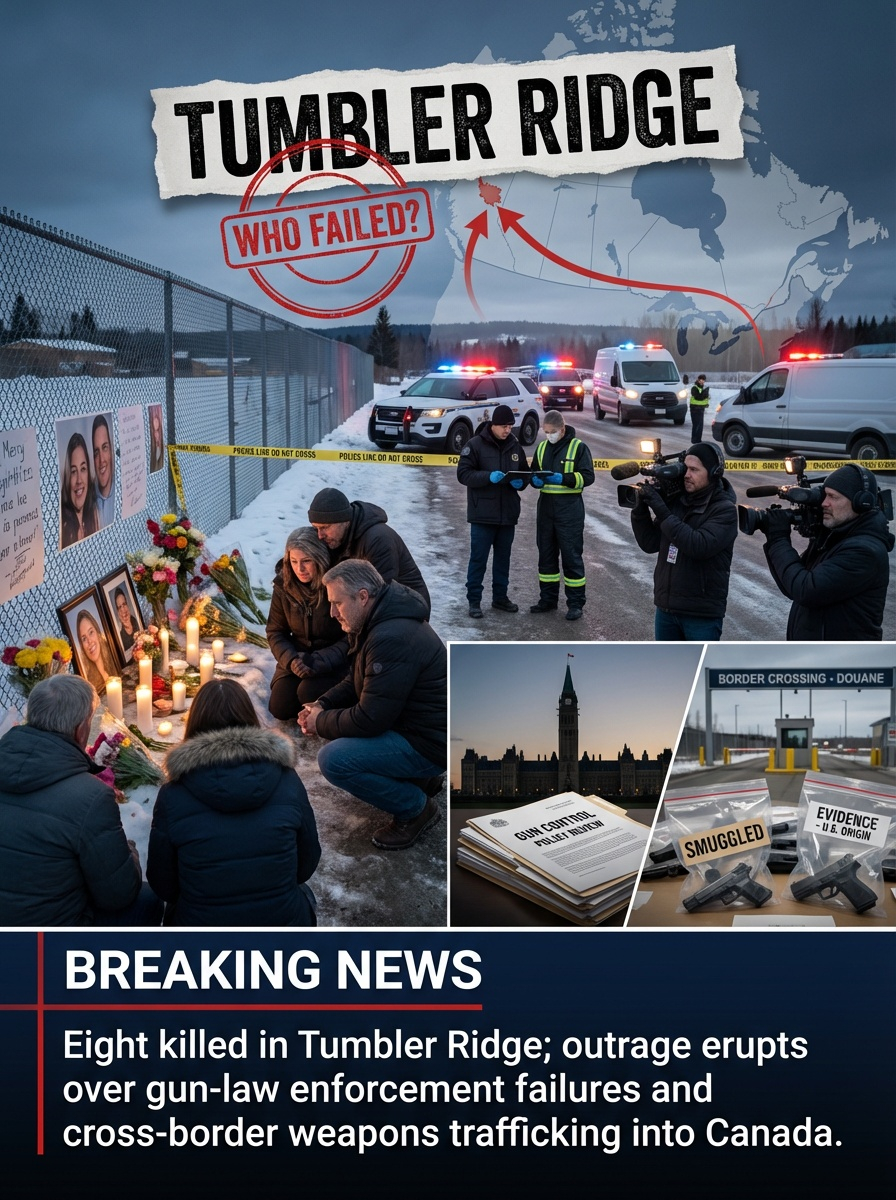
Tumbler Ridge, British Columbia — Canada is mourning the victims of a mass shooting that left eight people dead in the northern British Columbia community of Tumbler Ridge, an attack that has reignited national debate over firearm regulation, enforcement oversight, and cross-border gun trafficking.
Authorities say the violence unfolded on February 10, 2026, when an 18-year-old woman fatally shot members of her household — including her mother and 11-year-old stepbrother — before carrying out an attack at Tumbler Ridge Secondary School. Police confirmed that students and a teacher were among those killed. The suspect later died by suicide before officers could apprehend her.
Investigators with the Royal Canadian Mounted Police (RCMP) determined the suspect acted alone. At the scene, officers recovered four firearms believed to have been used in the attack. Officials disclosed that at least some of the weapons had previously been seized during earlier police interactions but were later returned following legal review — a revelation that has intensified scrutiny of firearm risk-assessment and return procedures.
The tragedy has reopened longstanding political divisions over Canada’s gun laws. The federal government pointed to the implementation of Bill C-21 — legislation strengthening handgun restrictions, expanding red-flag provisions, and increasing penalties for firearms trafficking — as evidence of existing regulatory action.
Opposition figures and some provincial leaders argue that enforcement failures, rather than legislative gaps, allowed the suspect to regain access to firearms. They have called for stricter monitoring of individuals flagged in prior police incidents.
At the same time, Public Safety Canada and law-enforcement agencies reiterated that cross-border smuggling remains a major source of illegal guns used in domestic crimes. Officials estimate a significant proportion of crime firearms originate in the United States, complicating prevention efforts despite Canada’s comparatively strict licensing regime.
Community vigils and national tributes have been held as families grieve the victims. Counseling services and trauma support programs have been deployed across the region.
Policy analysts say the attack underscores the layered challenges of gun violence prevention — spanning mental-health intervention, legal firearm oversight, and international trafficking enforcement — issues now central to Canada’s evolving public-safety debate.