Maduro Raid Fallout Fuels Regional Debate Over U.S. Power and Intervention Doctrine
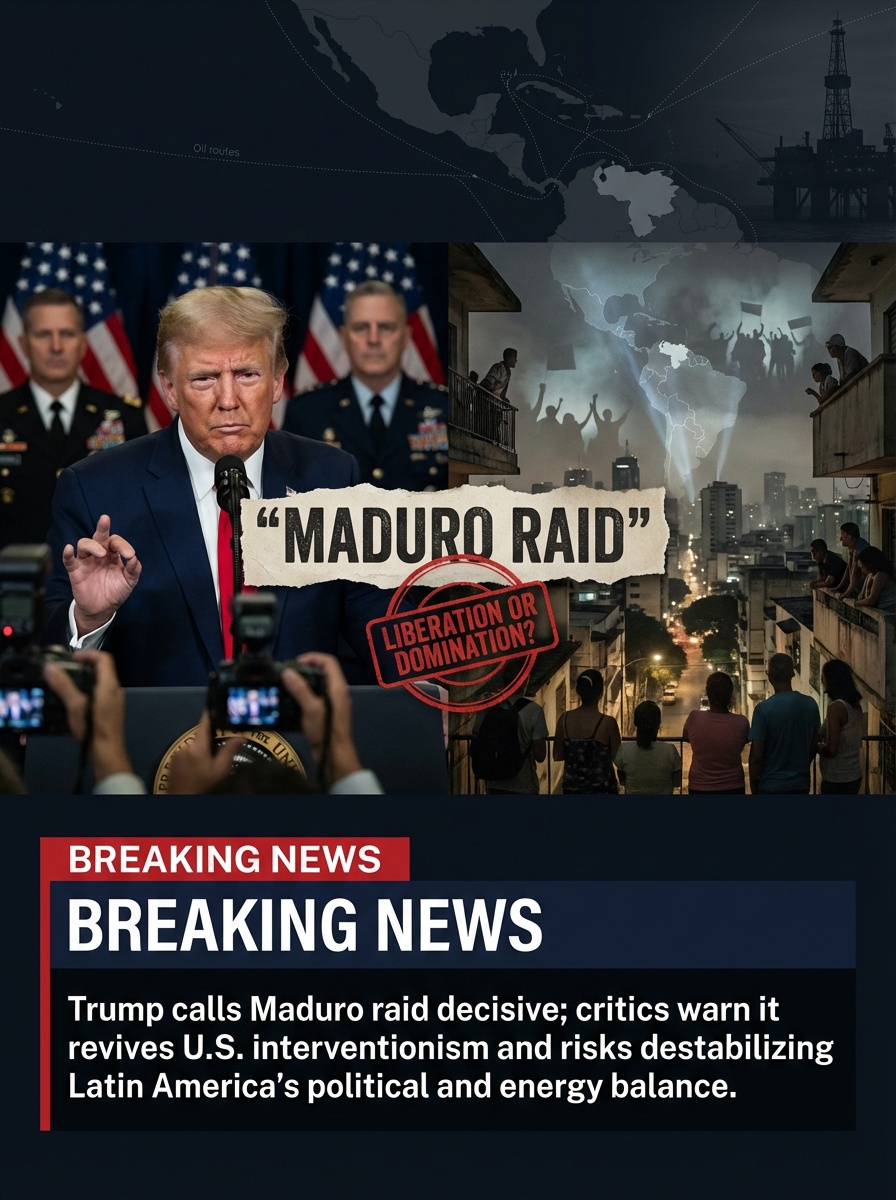
Washington / Caracas — The geopolitical aftershocks of the U.S. military operation that captured Venezuelan leader Nicolás Maduro continue to reverberate across Latin America, as governments, legal scholars, and energy markets assess the long-term implications of one of the most dramatic U.S. interventions in the region in decades.
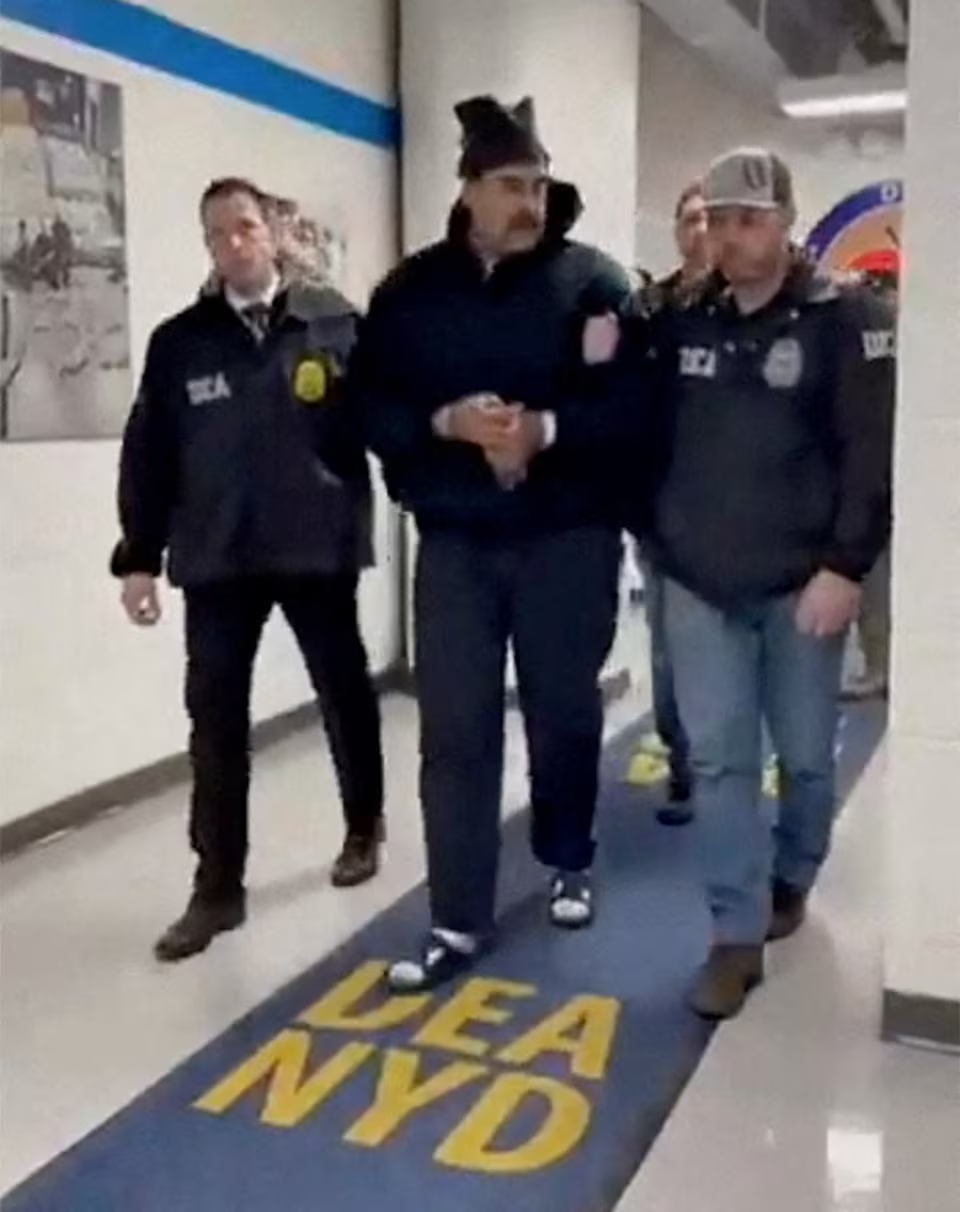
The January 3, 2026 raid — carried out by U.S. special operations forces with aerial and cyber support — resulted in Maduro’s detention and transfer to U.S. custody to face narcotics-related charges. U.S. officials framed the operation as a law-enforcement and national-security mission targeting a leader Washington had long accused of narco-terrorism ties.
President Donald Trump portrayed the strike as a demonstration of American deterrence power, arguing it signaled renewed U.S. willingness to confront authoritarian regimes and transnational criminal networks. Supporters of the operation say it removed a destabilizing actor and opened the door to democratic transition in Venezuela.
Yet international reaction has been sharply divided. Several Latin American and European governments warned that the cross-border raid risked undermining international law and sovereignty norms. Legal analysts have questioned whether forcibly apprehending a sitting head of state without multilateral authorization sets a dangerous precedent for unilateral intervention.
Complicating the diplomatic landscape is Washington’s parallel economic strategy. Following the raid, the United States eased elements of Venezuela’s oil sanctions framework, issuing licenses for renewed crude exports and energy investment tied to the country’s political transition. Analysts say the policy reflects a dual-track approach — combining military pressure with energy diplomacy and market stabilization efforts.
Regional security experts warn that while the raid achieved tactical success, it may carry long-term geopolitical costs. Critics argue it revives perceptions of U.S. hemispheric dominance, while supporters counter that decisive intervention was necessary after years of failed diplomacy.
As Venezuela navigates leadership transition and economic restructuring, the Maduro operation is emerging as a defining test of 21st-century U.S. intervention doctrine — balancing counter-authoritarian objectives, energy strategy, and the evolving boundaries of international law.