Trump Threat to Block Gordie Howe Bridge Raises Trade and Diplomatic Concerns
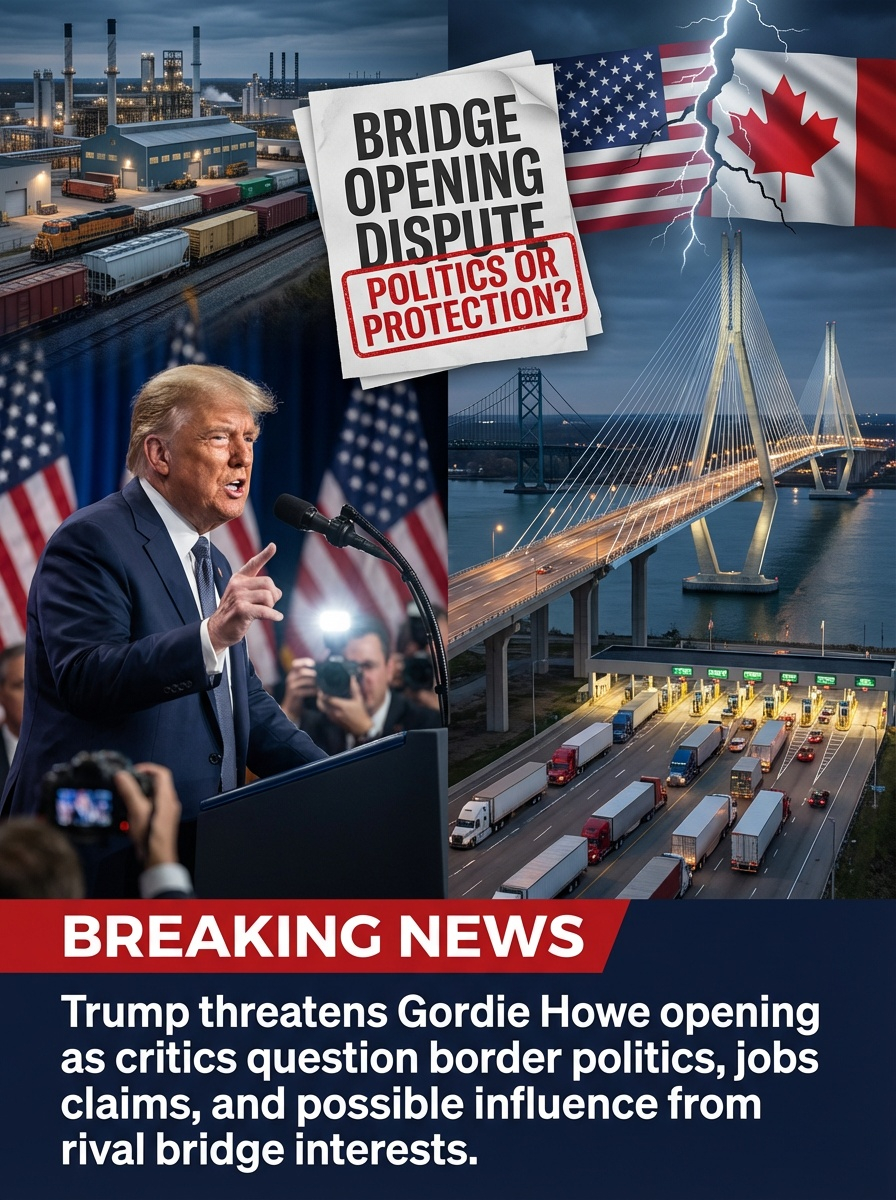
Washington / Ottawa / Detroit — A political dispute over the Gordie Howe International Bridge has introduced new tensions into U.S.–Canada relations, after President Donald Trump signaled he could seek to block or delay the long-planned cross-border project despite its advanced construction status.
The $4.7 billion bridge — connecting Detroit, Michigan, and Windsor, Ontario — is designed to ease chronic congestion at the existing Ambassador Bridge while strengthening one of North America’s busiest trade corridors. Once completed, the span is expected to handle a significant share of the roughly $300 billion in annual goods that move between the United States and Canada.
Trump has raised objections tied to trade imbalances, border infrastructure financing, and ownership arrangements associated with the project’s public-private partnership structure. Administration officials suggested that U.S. taxpayers must receive “fair value” in cross-border infrastructure deals, framing the dispute as part of broader economic nationalism policy.
Canadian Prime Minister Mark Carney sought to calm concerns, stating that both governments remain committed to resolving the disagreement through bilateral negotiation. Canadian officials emphasized that the bridge has already secured major regulatory approvals, including U.S. port-of-entry designation and customs facility planning.
The controversy has also revived scrutiny surrounding lobbying activity linked to interests associated with the Ambassador Bridge — currently owned by the Moroun family. The private bridge operator has long opposed the publicly financed Gordie Howe project, arguing it represents unnecessary competition. Analysts and watchdog groups have questioned whether industry lobbying influenced political pressure on the new span, though no verified evidence of direct policy favoritism has been publicly established.
Trade experts warn that delaying the project could disrupt supply chains spanning automotive manufacturing, agriculture, and industrial goods — sectors heavily dependent on seamless U.S.–Canada border logistics.
Despite the political rhetoric, construction on the Gordie Howe Bridge continues, with completion projected later this decade. Diplomats on both sides of the border say they expect the dispute to be resolved without jeopardizing the broader economic partnership underpinning North America’s integrated trade system.