U.S. Weighs Prolonged Military Campaign Against Iran Amid Escalation Fears
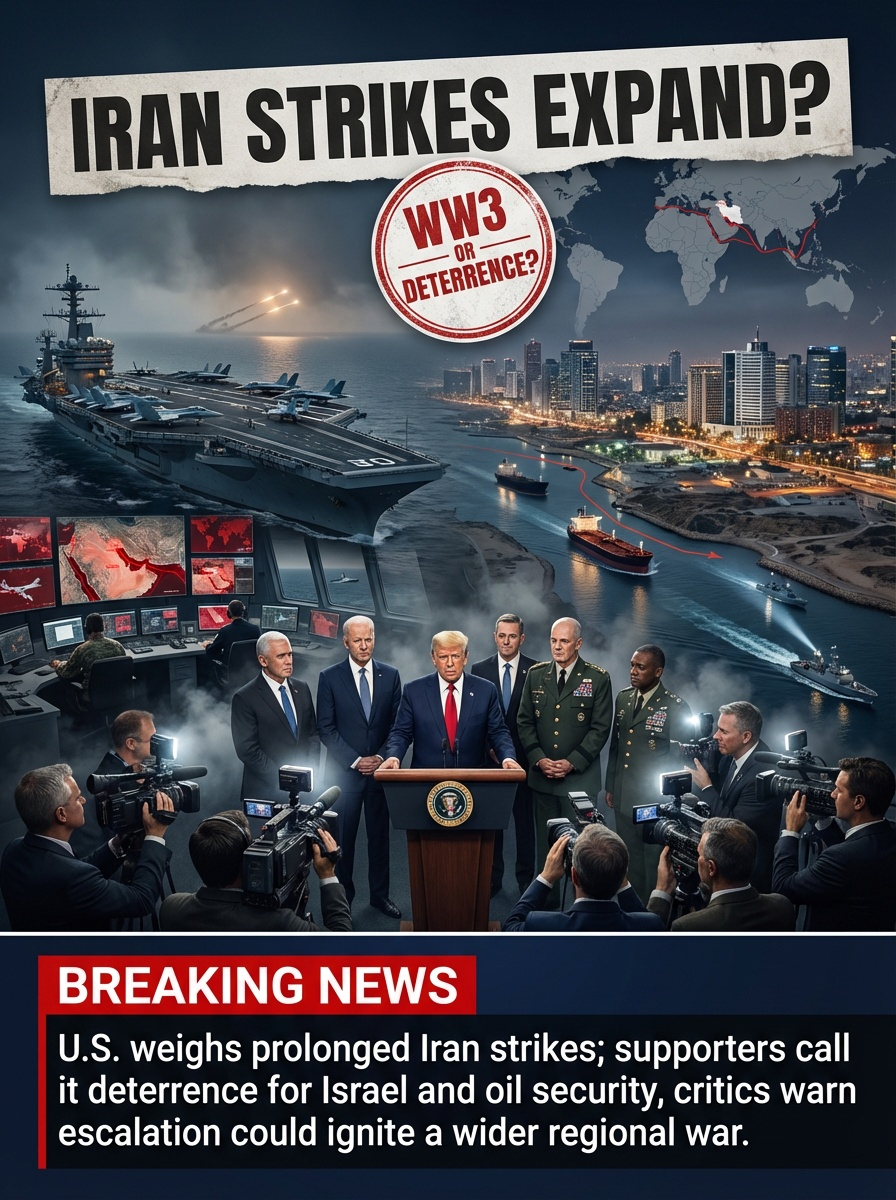

Washington / Middle East — U.S. military planners are preparing contingency options for a sustained campaign against Iran that could extend for weeks rather than days, according to defense officials, raising global concerns about regional escalation and economic fallout.
The planning reflects a significant shift from prior limited strikes toward broader operational scenarios targeting Iranian military infrastructure, missile systems, and nuclear-linked facilities if authorized by President Donald Trump. Officials say the Pentagon has already begun positioning additional forces in the region, including aircraft carrier strike groups, fighter squadrons, and missile-defense assets.
Administration officials frame the military buildup as coercive leverage aimed at forcing concessions from Tehran amid stalled nuclear diplomacy. Trump has repeatedly emphasized that “all options are on the table,” while expressing skepticism that negotiations alone can curb Iran’s nuclear and missile ambitions.
Iranian leaders have responded with warnings that any new U.S. attack would trigger “all-out war,” signaling potential retaliation across multiple fronts. Security analysts note that Iran retains significant asymmetric capabilities, including ballistic missiles, proxy militias, cyber operations, and the ability to target U.S. bases across the Gulf region.
Particular concern centers on the Strait of Hormuz, a strategic maritime chokepoint through which roughly one-fifth of global oil supply transits. Any disruption — whether through mining, naval confrontation, or tanker seizures — could rapidly destabilize energy markets.
Oil prices have already reacted to the rising tension, with geopolitical risk premiums pushing volatility higher even as markets fluctuate on diplomatic signals.
Regional governments are also bracing for spillover. Middle Eastern states hosting U.S. forces could become retaliation targets, while allies such as Israel view Washington’s posture as central to their deterrence strategy.
Policy experts say the crisis reflects a dual-track U.S. approach: military pressure paired with diplomatic outreach. However, they warn that prolonged strikes risk miscalculation, potentially transforming a contained confrontation into a wider regional conflict.
As force deployments expand and negotiations falter, the coming weeks may prove pivotal in determining whether the standoff remains coercive signaling — or escalates into a sustained Middle East war with global economic consequences.