U.S. Inflation Slows to 2.4%, Fueling Political Credit Fight and Economic Debate
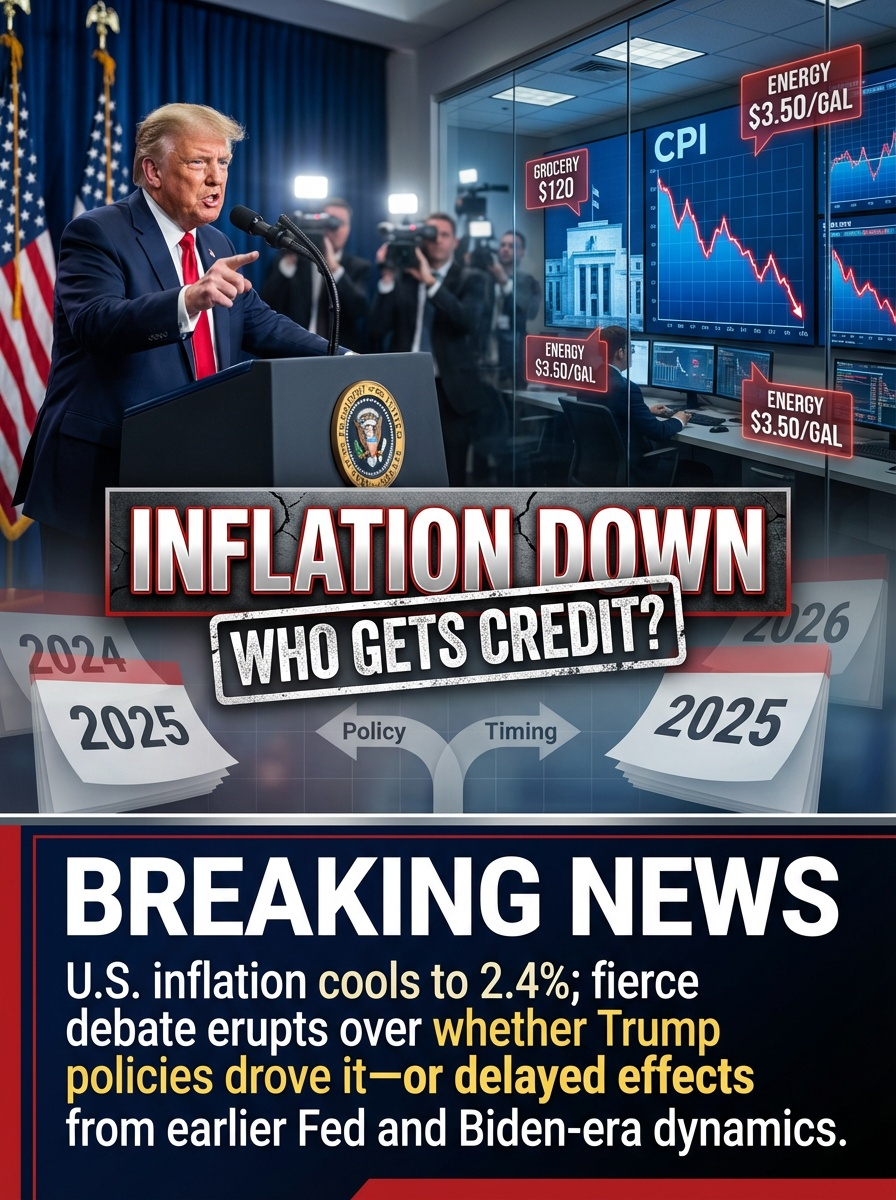
Washington — U.S. inflation cooled further in January 2026, offering fresh evidence that price pressures continue to ease after several years of post-pandemic volatility — while simultaneously igniting a political dispute over who deserves credit for the improvement.
According to the latest Consumer Price Index (CPI) report released by the Bureau of Labor Statistics, headline inflation rose 2.4% year over year in January, with prices increasing 0.2% on a monthly basis. The figures mark continued progress toward the Federal Reserve’s long-standing 2% inflation target, reinforcing expectations that the peak inflation surge of the early 2020s has subsided.
The White House quickly highlighted the data as validation of President Donald Trump’s economic agenda, pointing to deregulation efforts, tariff policies, and domestic energy expansion as drivers of price stabilization. Administration officials argued that pro-production policies and tighter immigration enforcement helped ease labor and supply-chain pressures.
However, many economists caution against attributing short-term inflation movements to any single administration. Monetary policy experts note that inflation trends often reflect delayed effects of prior Federal Reserve interest-rate hikes, which began aggressively tightening borrowing conditions in 2022 and 2023. Those higher rates dampened consumer demand, slowed housing markets, and gradually reduced price growth across goods and services.
Analysts also emphasize the lingering influence of pandemic-era supply disruptions and fiscal stimulus implemented during the Biden administration. As supply chains normalized and energy markets stabilized, inflation naturally decelerated from its earlier peaks — a process that can span multiple presidential terms.
Despite the encouraging headline figure, price pressures remain uneven. Housing costs, insurance premiums, and certain food categories continue to rise faster than the overall inflation rate, tempering consumer optimism.
Financial markets responded cautiously to the report, with investors balancing optimism about price stability against uncertainty over future Federal Reserve rate cuts.
Economists broadly agree that while the cooling trend is genuine, assigning definitive political credit remains complex. Inflation, they note, is shaped by global supply forces, central-bank policy, fiscal decisions, and structural economic shifts that unfold over years rather than election cycles.
As inflation edges closer to target levels, the policy debate is shifting from crisis management to long-term price stability — ensuring that progress endures without triggering a renewed economic slowdown.