Unidentified DNA, Surveillance Leads Intensify Search in Nancy Guthrie Abduction Case
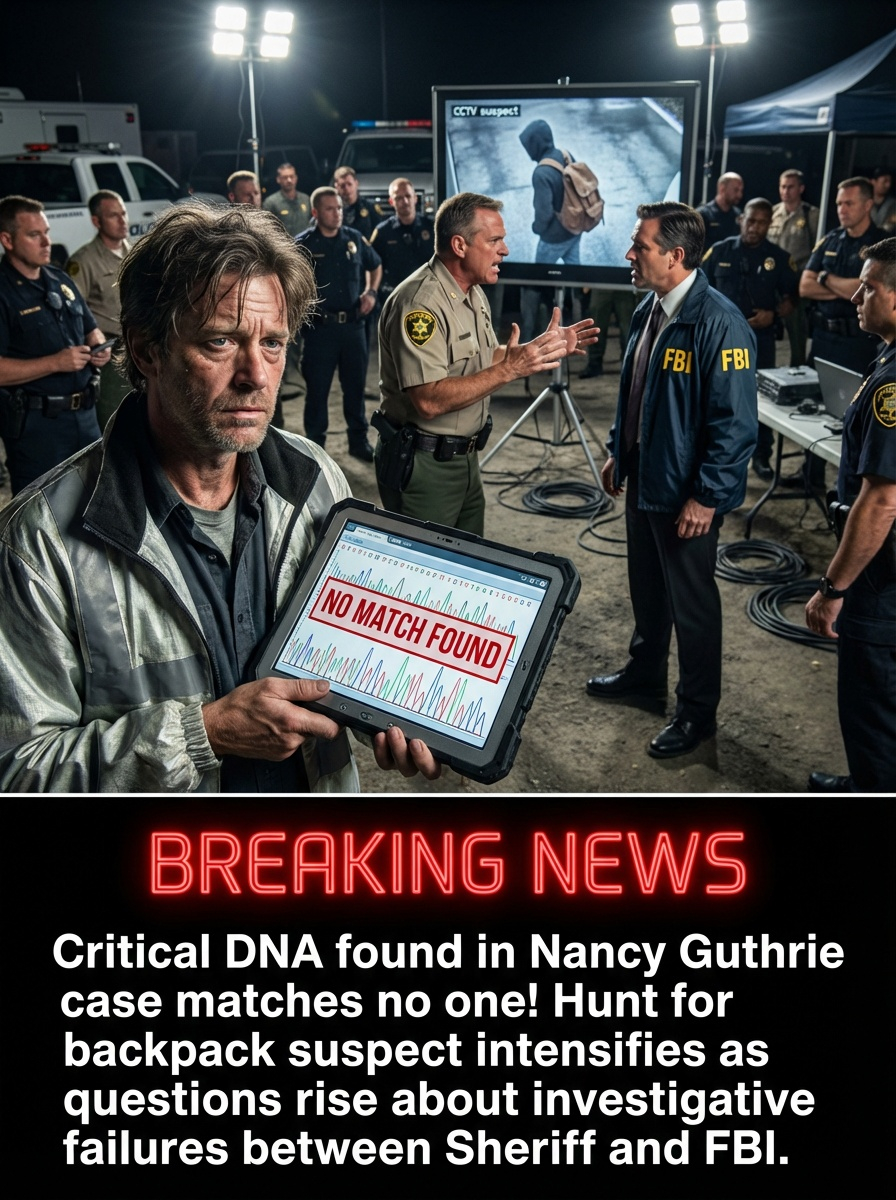
Tucson, Arizona — Investigators searching for missing Arizona woman Nancy Guthrie say newly recovered forensic evidence has expanded the scope of the case, even as the primary suspect remains unidentified weeks after her disappearance.
Guthrie, 84, was reported missing in late January after authorities discovered signs of a violent struggle inside her Tucson-area residence. Blood evidence and disturbed furnishings led investigators to classify the case as a suspected abduction, prompting a joint probe involving the Pima County Sheriff’s Department and the Federal Bureau of Investigation.
In recent developments, law enforcement officials confirmed that DNA samples recovered from the crime scene — including material collected from gloves and interior surfaces — do not currently match profiles in national criminal databases. The absence of a database match suggests the suspect may have no prior felony record or has never submitted DNA through previous law-enforcement encounters.
Sheriff Chris Nanos said forensic testing remains ongoing, with additional samples undergoing advanced analysis. “We are committed to using every investigative tool available,” Nanos told reporters, adding that federal laboratories and private forensic partners are both contributing to the evidence review.
Authorities have also released surveillance images captured by residential doorbell cameras near Guthrie’s home. The footage shows a masked male individual, described as approximately 5 feet 9 inches to 5 feet 10 inches tall with an average build, carrying a black Ozark Trail backpack. Investigators believe the individual may be directly linked to the abduction.
Public response has been significant. Law enforcement agencies report receiving thousands of tips since releasing the images, though none have yet led to a confirmed identification or arrest. The FBI has increased the reward for information leading to Guthrie’s recovery or the suspect’s capture.
Despite reported investigative friction over forensic handling and evidence processing, local and federal officials maintain that cooperation continues.
As the search enters another critical phase, investigators say forensic breakthroughs — particularly through genealogy DNA analysis — may prove pivotal in identifying the suspect and advancing the case.