💥 Deadly Mosque Bombing in Islamabad Leaves 31 Dead
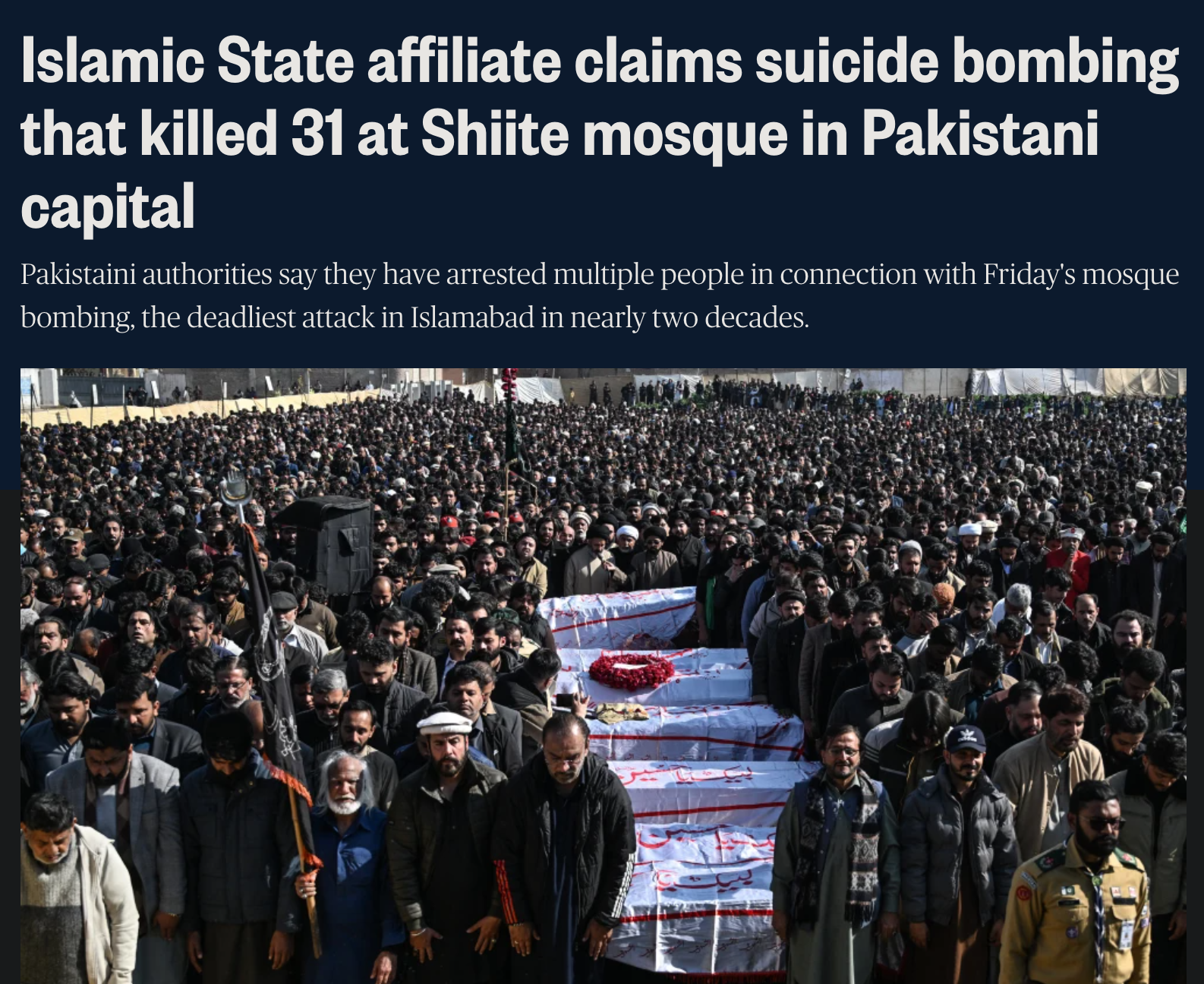
💥 Deadly Mosque Bombing in Islamabad Leaves 31 Dead
A deadly mosque bombing in Islamabad has left at least 31 people dead and 169 injured after a suicide attacker struck inside a Shiite place of worship on the outskirts of Pakistan’s capital. The attack, claimed by an affiliate of the Islamic State group, marks one of the most devastating acts of violence in the city in nearly two decades and raises renewed concerns over militant activity in Pakistan.
Under heavy security, mourners gathered Saturday at the same mosque to hold funeral prayers for the victims. The emotional scenes unfolded as authorities continued their investigation into the bombing, which targeted worshippers during a gathering at the mosque.
Pakistani officials confirmed they have identified the suicide bomber, as well as several alleged facilitators. Law enforcement agencies also announced the arrest of the suspected mastermind believed to have coordinated the attack. Security operations are ongoing as investigators work to determine the full scope of the network involved.
 In a statement released through its Amaq News Agency, the regional ISIS affiliate claimed responsibility for the Islamabad mosque bombing. According to the statement, the attacker opened fire on security guards stationed outside before detonating his explosive vest at the mosque’s inner gate. The group used inflammatory language to justify the attack, accusing Pakistani Shiites of supporting militias opposed to ISIS in Syria.
The scale of the casualties makes this the deadliest attack in Islamabad since 2008, when a suicide bombing at the Marriott Hotel killed 63 people. It also follows another recent act of violence in November outside a court building that left 12 dead, highlighting a troubling pattern of militant attacks in and around the capital.
Security analysts say the resurgence of extremist violence poses significant challenges for Pakistan’s government, which has been grappling with economic pressures and political instability alongside rising security threats. The Islamabad mosque attack underscores fears that militant groups are seeking to reassert their presence through high-profile assaults designed to inflame sectarian tensions.
As families mourn their loved ones and the injured receive medical treatment, authorities face mounting pressure to strengthen counterterrorism measures and prevent further attacks. The tragedy has once again drawn attention to the fragile security landscape in Pakistan and the ongoing threat posed by extremist organizations operating in the region.