130,000 NEW JOBS! BUT IS THIS A TRAP?
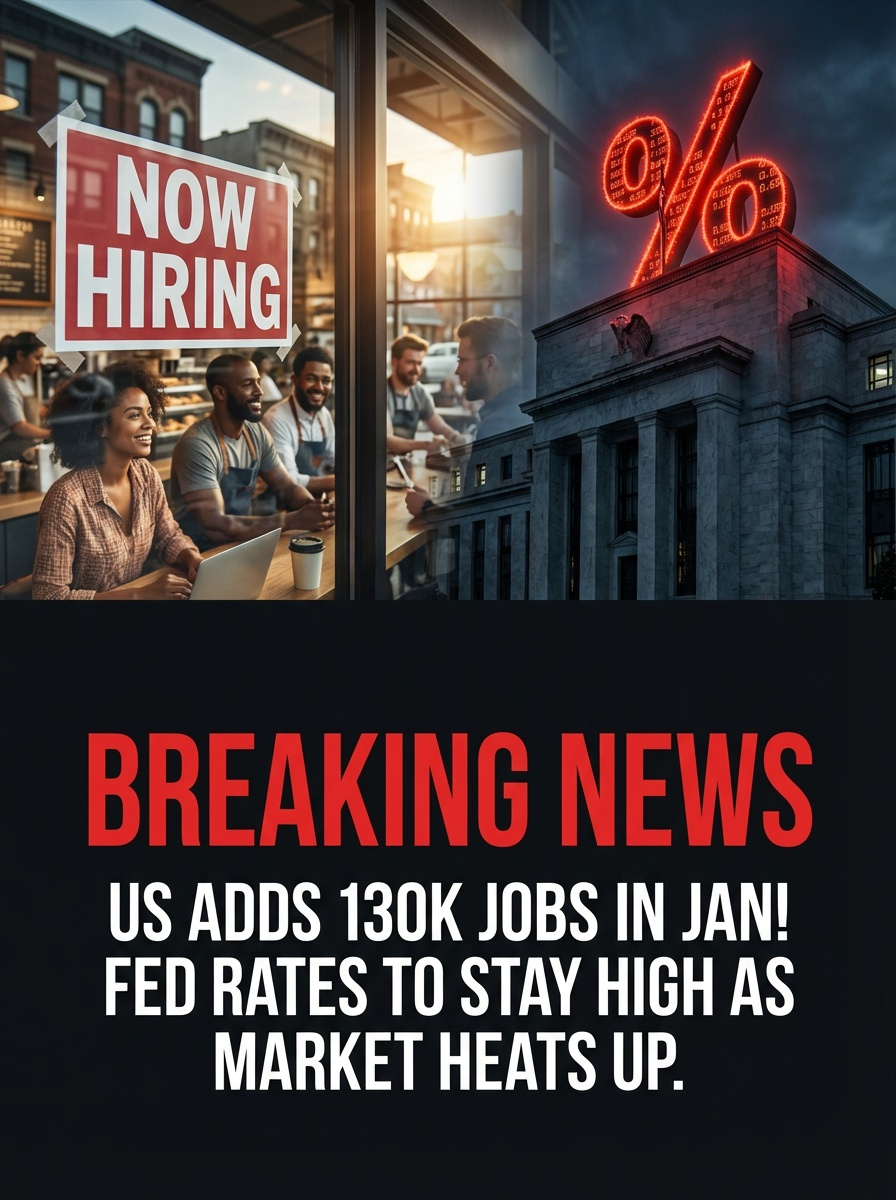
WASHINGTON, D.C. — The U.S. labor market delivered an unexpected jolt to economists and financial markets after new federal data showed employers added 130,000 jobs in January, significantly surpassing forecasts and signaling continued resilience in early 2026.
According to the U.S. Bureau of Labor Statistics, the unemployment rate edged down to 4.3 percent, while payroll growth was led by hiring in health care, social assistance, construction, and professional services. The gain marked the strongest monthly increase in several months and exceeded many economists’ expectations, which had projected far weaker hiring.

Financial markets initially welcomed the data as evidence that the economy remains on stable footing despite high borrowing costs. Treasury yields rose and equities reacted positively as investors recalibrated expectations for growth. However, the upbeat headline masked deeper structural concerns within the labor market.
Annual benchmark revisions released alongside the report revealed that job creation in 2025 was far weaker than previously believed, with payroll growth dramatically revised downward. Some economists say the revisions suggest the labor market has been slowing for months beneath the surface, even as recent data appear strong.
Analysts caution that the composition of hiring also raises questions. A disproportionate share of January’s job gains came from the health-care sector, prompting concerns about uneven labor demand across industries. Layoff announcements have simultaneously climbed, reaching their highest early-year levels since the aftermath of the global financial crisis.

For monetary policymakers, the report complicates the path forward. Federal Reserve officials, who held interest rates steady at the start of the year, closely monitor employment strength as they weigh when to begin cutting borrowing costs. Stronger-than-expected hiring reduces urgency for rate cuts and could prolong the current high-rate environment.
While the January figures underscore the economy’s resilience, economists emphasize that a single month does not define long-term momentum. With inflation pressures lingering and hiring trends uneven, the labor market’s strength may prove durable—or temporary—as policymakers and investors await clearer signals in the months ahead.