🖤 “THEY SIMPLY SHOWED UP”: HOW FIVE STUDENTS WALKED INTO HISTORY — AND FINALLY STAND IN BRONZE 🕊️
In the fall of 1958, five Black students walked onto the campus of East Tennessee State College and quietly altered the course of its history. There were no marches, no chants, no television cameras waiting to capture the moment. They did not arrive seeking recognition or applause. They came with books in their hands, determination in their hearts, and an unspoken understanding that simply being there would be an act of courage. What awaited them was uncertainty — isolation, resistance, and the weight of being first in a place not built with them in mind.
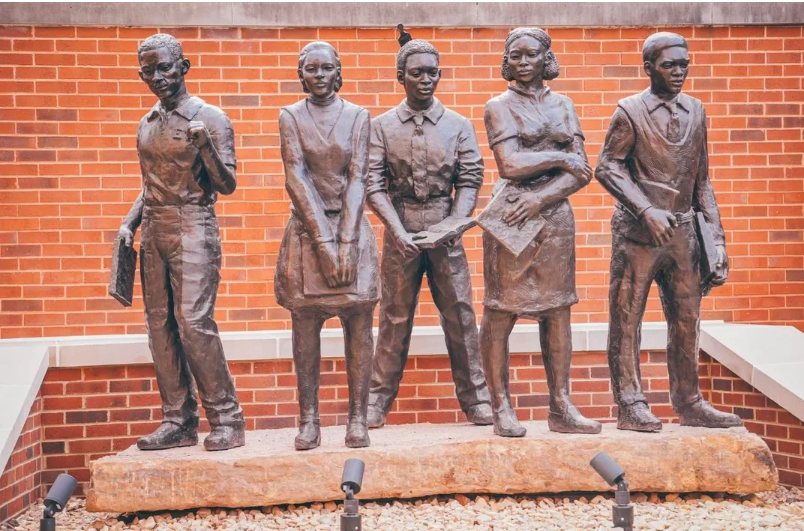 Their names deserve to be spoken slowly and remembered fully: Eugene Caruthers, Elizabeth Watkins Crawford, George L. Nichols, Mary Luellen Owens Wagner, and Clarence McKinney. Each carried their own fears and hopes, yet together they shared a single path — one defined by quiet resilience. Day after day, they attended classes, crossed campus grounds, and claimed a right to education that had long been denied. They did not demand attention. They simply showed up, and in doing so, opened doors that could never again be closed.
Decades passed. Their story lived mostly in memory and institutional records, acknowledged but rarely centered. Then, in 2022, a winter storm damaged a memorial fountain dedicated to their bravery. What seemed like a loss became an unexpected turning point — a moment that reignited conversation about how their legacy should truly be honored. From that damage grew something far more permanent.
In 2025, East Tennessee State University unveiled five life-size bronze statues in Borchuck Plaza.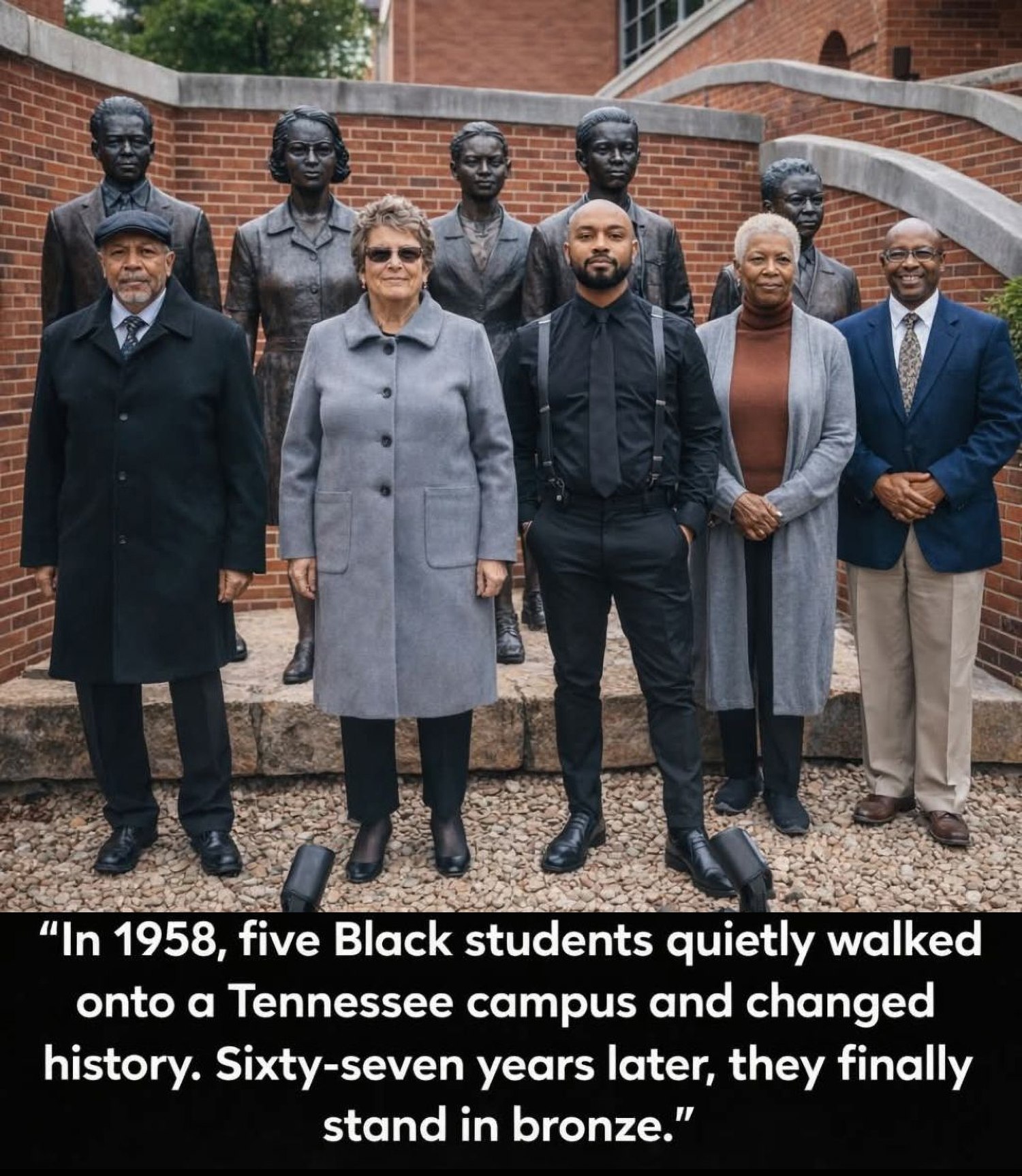 The sculpture, titled “The Path,” was created by artist Austen Brantley and captures the students mid-stride, walking together, forward-facing, unified in purpose. The figures are not heroic in exaggeration, but powerful in their realism — ordinary students performing an extraordinary act by refusing to turn back.
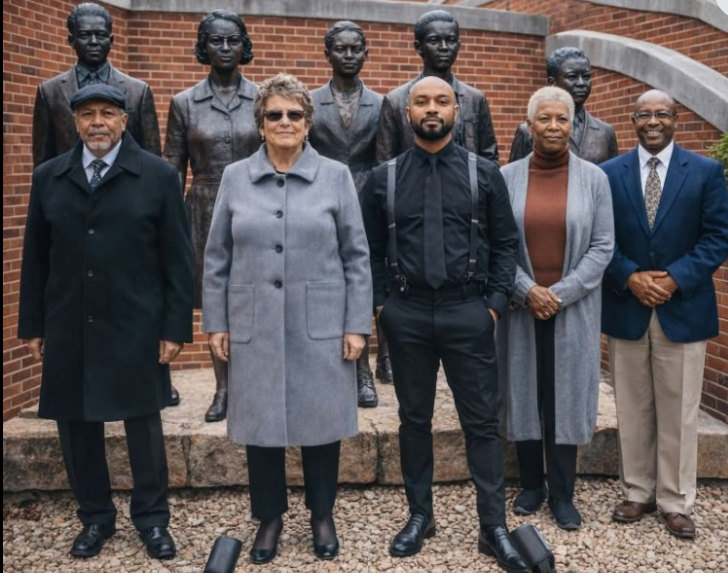
Nearly 67 years after they first stepped onto campus, some of those very students stood before their own likenesses, witnessing history finally pause long enough to acknowledge what they had done. It was not a moment of spectacle, but of quiet justice.
Recognition does not always arrive on time. Sometimes it comes decades late, after storms, after silence, after patience has been tested. But when it does arrive — it stands firm. It stands visible. It stands in bronze. 👏🏾🕊️