The Quiet Hour After the Storm
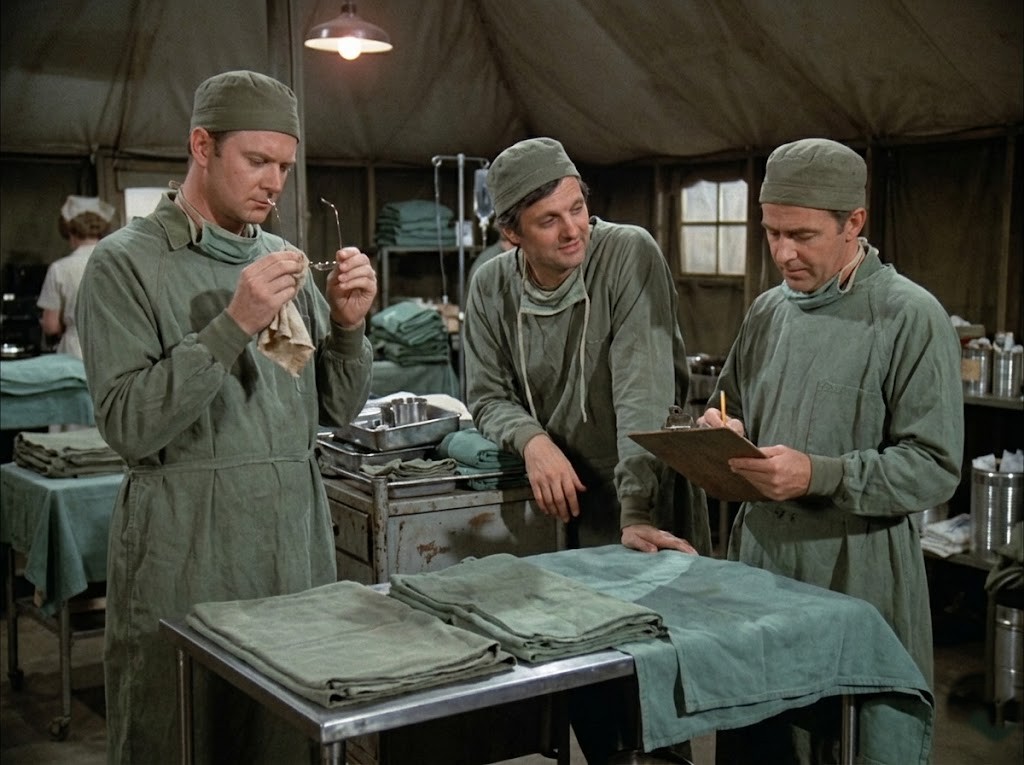
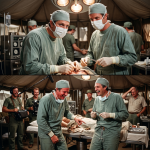
The surgical tent always held a specific kind of silence—a heavy, ringing stillness that only arrives after the last patient has been wheeled to Post-Op and the hum of the generator seems to vibrate right through your marrow.
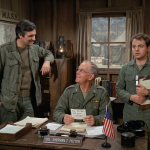
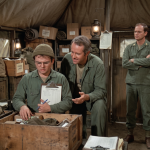
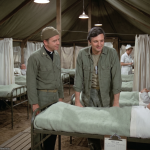
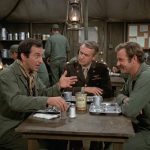
In the dim light of a single overhead bulb, the three of them stood around a stainless-steel table draped with folded green linens. They were exhausted, the kind of bone-deep, soul-weary tired that makes the edges of the world feel blurry.
Hawkeye stood on the left, his surgical cap slightly askew, meticulously cleaning his glasses with a scrap of cloth. His shoulders were hunched, the usual sharp spark in his eyes dampened by the long hours of a brutal shift.
B.J. leaned against the table, his arms crossed over his scrubs. He wasn’t looking at the supplies; he was watching Hawkeye with that steady, grounding gaze of his, a silent anchor in the middle of a war zone.
On the right, Charles Emerson Winchester III held a clipboard, his pen poised over a chart. Even in his fatigue, he maintained a rigid, almost comical posture, though his jaw was set tight against the phantom sounds of the day.
“Seventy-two,” Winchester murmured, his voice flat, devoid of its usual haughty cadence. “The tally is seventy-two, and yet, I find myself unable to remember the face of the boy in bed four.”
Hawkeye stopped wiping his glasses, the cloth freezing mid-motion.
“Don’t,” Hawkeye said, his voice barely a whisper. “Don’t go counting them, Charles. That’s how the ghosts catch up to you.”
“I am merely stating a fact, Pierce,” Winchester snapped, though the bite was missing from his tone. “A factual, clinical record of a day that refuses to end.”
“It’s not just a record,” B.J. interrupted, stepping forward, his voice low and firm. “It’s a weight. And you’re trying to carry all of it on one clipboard.”
Winchester looked up, his eyes darting between his two friends, the mask of the aristocratic surgeon finally slipping to reveal the raw, shaking human beneath.
“If I don’t carry the weight,” Winchester breathed, his voice cracking for the first time, “then who will?”
The room seemed to shrink around that question.
For a heartbeat, the only sound was the distant, lonely wail of a truck passing somewhere out on the perimeter road. Hawkeye set his glasses down on the table, not putting them on, as if he preferred the world slightly out of focus.
He reached out and gently took the clipboard from Winchester’s hand. He didn’t read it. He just placed it facedown on the linen-covered table.
“We share the load, Charles,” Hawkeye said softly. “That’s the deal. We split the shifts, we split the drinks, and we split the things we can’t say out loud.”
B.J. nodded, shifting his weight to stand beside Winchester. “You don’t have to be the bookkeeper of our tragedies. You just have to be the guy standing next to us in the morning.”
Winchester stood still, his hands empty now, hanging awkwardly at his sides. He looked at the clipboard, then at his two colleagues. The silence was no longer heavy or ringing; it felt, for the first time in hours, like a shared space.
A small, weary smile touched the corners of Winchester’s mouth—a rare, genuine expression that didn’t involve a barb or a lecture.
“I suppose,” Winchester conceded, his voice returning to its familiar, clipped rhythm, “that a shared burden is mathematically less taxing on the individual.”
“That’s the spirit,” Hawkeye chuckled, reaching out to clap a hand on Winchester’s shoulder. “Spoken like a true man of science.”
B.J. let out a breath he seemed to have been holding since dawn. “Now, how about we find a way to get some coffee that doesn’t taste like radiator fluid? I think we’ve earned at least that much from the universe.”
They moved away from the table together, walking with that slow, shuffling gait that only surgeons possess after a double shift. They weren’t soldiers, not really. They were just three men who had found each other in the middle of a very long, very dark tunnel.
They didn’t solve the war that night, and they didn’t forget the seventy-two names they had written on the charts. But as they headed toward the Mess tent, the weight didn’t feel quite so impossible.
The tent stayed behind them, bathed in that soft, amber glow, a sanctuary of green linens and old friends who refused to let the darkness win.
In the heart of the 4077th, the most important work wasn’t just the healing of bodies, but the holding of one another until the sun came back up.